| Email Address sales@sprintsmsservice.com |
Destination For Your Business Goal
| |
Potential issues users might face include firewalls blocking port 8080, incorrect URLs, or outdated configurations. Troubleshooting tips could be helpful here. Also, legal and ethical considerations when using public webcams—respecting privacy and adhering to local laws—are important to mention.
Wait, the user mentioned "verified"—need to emphasize the importance of verifying the legitimacy of such webcams to avoid accessing sites that might be malicious or violating privacy. Also, maybe provide guidance on how users can check if a webcam page is verified, like looking for SSL certificates, user reviews, or official sources. active webcam page inurl 8080 verified
First, "active webcam page" suggests they're interested in webcams that are currently live and accessible. The term "inurl 8080" refers to URLs that include the port number 8080, which is commonly used as an alternative HTTP port. Port 8080 is often used when the default HTTP port (80) is already in use or for specific configurations. Now, "verified" here probably means that the webcams are confirmed to be working or authenticated, maybe with user verification processes. Potential issues users might face include firewalls blocking
I need to explain what port 8080 is and why it's used in this context. Maybe mention that some webcams are configured to run on non-standard ports for security or to avoid conflicts. Then, I should discuss the types of active webcams available—like public webcams, security cameras, and personal setups. Each type uses port 8080 for different reasons. Public webcams might use it for streaming, security cameras for local access, and personal ones for remote monitoring. Wait, the user mentioned "verified"—need to emphasize the
Double-check technical accuracy regarding port 8080 and how webcams are typically configured. Ensure that the advice is up-to-date with current security standards. Mention that using HTTPS is crucial even if port 8080 is used, to encrypt data.
Finally, conclude with a summary of key points and remind readers to use such resources ethically and legally. Make sure all the information is correct and presented in an accessible way for readers with varying technical backgrounds.
I should structure the post into sections: Introduction, Understanding Port 8080, Types of Active Webcams, Security Concerns, Technical Verification, Troubleshooting, and Legal Aspects. Each section needs to be detailed but clear. Maybe include examples of URLs with port 8080, but avoid providing any that might be intrusive or harmful.

Personalized Messaging
Flexible personalized messaging with editable fields for you to send SMS conviniently.

Language-Based Messaging
Create a customized message in your preferred language and send it in unicode.

Two-Factor Authentication
Secure your applications at scale by sending dynamic verification codes.

Scheduling & Group SMS
Strategically manage your marketing based on the preferences.

Global and Instant Delivery
Send your SMS all across the globe hassle-free and instantly.

Multiple Interface Options
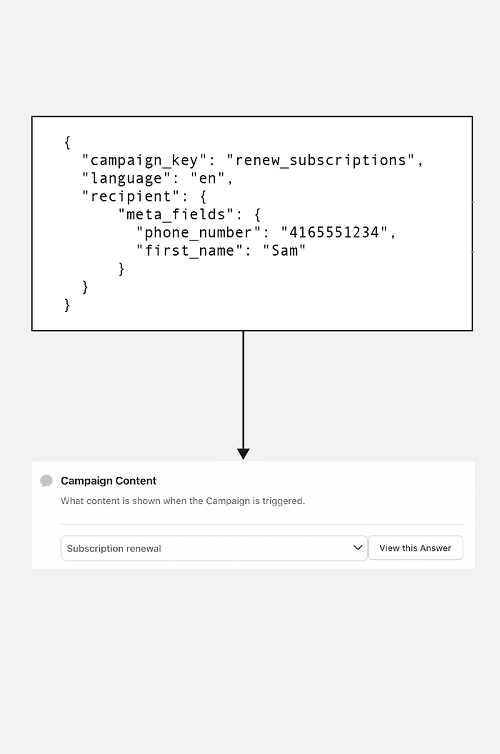
Choose how to send a message using our SMS Panel, API or SMPP.
SMS API can be considered safe if proper security measures and protocols are implemented. Here are three pointers that show the safety features of SMS API:
Encryption
Encryption is one of the key security features of SMS API. It ensures that the data being transmitted between different software components is protected from unauthorized access, interception, or modification. APIs should use industry-standard encryption algorithms, such as SSL or TLS, to encrypt data in transit and protect sensitive information.
Authentication and authorization
SMS API should also implement strong authentication and authorization mechanisms to ensure that only authorized users and applications can access and use the API. This can be achieved through methods such as API keys, OAuth tokens, or multi-factor authentication, which help to verify the identity of the user or application and prevent unauthorized access.
Compliance and auditing
SMS API should comply with relevant industry standards, regulations, and best practices, such as PCI DSS, HIPAA, or GDPR, to ensure that the API is secure and compliant with data protection laws. Regular auditing and monitoring of the API usage can help identify potential security vulnerabilities or incidents and take appropriate actions to mitigate them.
Java SMS API
Java SMS API is a set of programming tools and libraries that developers can use to build SMS messaging applications in Java. Java SMS API supports various protocols such as SMPP, HTTP, and FTP, and is widely used in enterprise-level messaging applications.
Python SMS API
Python SMS API is a set of programming tools and libraries that developers can use to build SMS messaging applications in Python. Python SMS API supports various protocols such as SMPP, HTTP, and FTP, and is popular for its ease of use and readability.
PHP SMS API
PHP SMS API is a set of programming tools and libraries that developers can use to build SMS messaging applications in PHP. PHP SMS API supports various protocols such as SMPP, HTTP, and FTP, and is widely used in web development.
Ruby SMS API
Ruby SMS API is a set of programming tools and libraries that developers can use to build SMS messaging applications in Ruby. Ruby SMS API supports various protocols such as SMPP, HTTP, and FTP, and is popular for its simplicity and expressiveness.
.NET SMS API
.NET SMS API is a set of programming tools and libraries that developers can use to build SMS messaging applications in .NET languages such as C# and Visual Basic. .NET SMS API supports various protocols such as SMPP, HTTP, and FTP.
Node.js SMS API
Node.js SMS API is a set of programming tools and libraries that developers can use to build SMS messaging applications in Node.js, a popular JavaScript runtime. Node.js SMS API supports various protocols and is known for its speed and scalability.
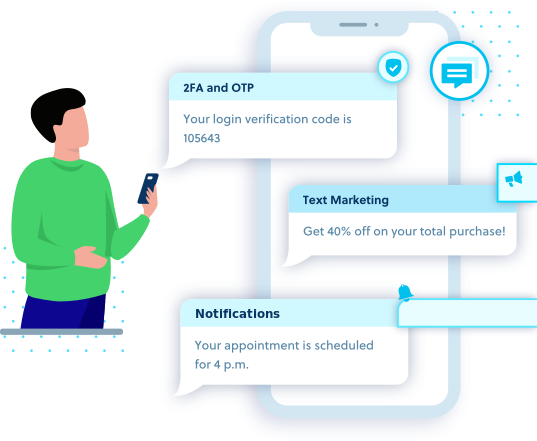
SMS APIs are commonly used by businesses and organizations for a variety of purposes. One popular use case is marketing and promotions, where SMS messages are used to send marketing campaigns, special offers, and event reminders to customers. Another use case is authentication and security, where SMS messages are used for two-factor authentication to help prevent unauthorized access and reduce the risk of fraud. Finally, SMS APIs are also used for notifications and alerts, such as appointment reminders, payment confirmations, and delivery notifications, to improve communication and enhance the overall customer experience.
Marketing and promotions
SMS APIs are commonly used by businesses to send promotional messages to their customers. This can include marketing campaigns, special offers, and reminders about upcoming events or promotions. It is a boon in disguise for small and medium enterprise.
Authentication and security
SMS APIs can be used for two-factor authentication, which adds an extra layer of security to the login process by requiring users to enter a code that is sent to their mobile phone via SMS. This can help prevent unauthorized access and reduce the risk of fraud.
Notifications and alerts
SMS APIs can be used to send notifications and alerts to customers or employees, such as appointment reminders, payment confirmations, or delivery notifications. This can help improve communication and reduce the risk of missed appointments or deadlines.
SMS APIs are difficult to integrate with existing systems. In reality, most SMS APIs are designed to be easy to integrate with existing systems, and many providers offer extensive documentation and support to help developers get started.
SMS APIs are only for large organizations. While SMS APIs are certainly useful for large organizations with a large customer base, they can also be beneficial for smaller businesses or organizations that need to communicate with customers or employees quickly and reliably.
SMS APIs are expensive. While some SMS API providers may charge high fees, there are many providers that offer affordable pricing plans and flexible payment options, making SMS APIs accessible to businesses and organizations of all sizes.
SMS APIs are not secure. In reality, most SMS APIs use encryption and other security measures to ensure the confidentiality and integrity of messages sent over the API. Additionally, many SMS API providers offer additional security features such as two-factor authentication to further enhance security.