We collect cookies to better configure the services of the website. By consenting, you allow us to obtain anonymised statistical data. More information can be found here. Thank you!
Ryan Keating zve na film Svatý pavouk
One evening the Collective announced a live stream: the complete verified run, stitched and remastered, with memory anecdotes between episodes. Riya’s grandfather beamed, and the chat filled with nostalgic confessions—sleepless nights waiting to learn a hero’s fate, children reenacting battles in backyards, elders debating translations. As the closing credits rolled in high definition, a caption scrolled: “Preserved by many hands, for many hearts.”
Riya realized the archive had done more than save a TV series; it had stitched lives together across time. “All Episodes Verified” was no longer just a technical claim. It was proof that stories endure when people care enough to keep them whole. She kept volunteering, digitizing another faded cassette, each click a small ritual of remembrance. mahabharat star plus all episodes verified
Riya found the forum post at midnight: “Mahabharat Star Plus — All Episodes Verified.” Her heart fluttered. She had grown up watching the 2013 Star Plus Mahabharat reruns with her grandfather, who would hum old bhajans and correct the names she mixed up. The show had stitched itself into the fabric of their Sunday afternoons—dramatic close-ups, thunderous drums, and slow, reverent camera moves whenever Krishna spoke. One evening the Collective announced a live stream:
Curious, Riya clicked the link. Instead of a download list, the thread led to a dusty online archive led by a group of volunteers calling themselves the Vaibhav Collective. Their goal: preserve every episode, subtitle, cut-scene and making-of clip before links decayed and servers died. The Collective treated each episode like a temple—cataloged, checked, and timestamped. “All Episodes Verified” meant more than completeness; it meant confirming authenticity, restoring audio, and replacing corrupted frames. “All Episodes Verified” was no longer just a
The Collective verified her tapes against broadcast logs, audio spectrums, and frame-by-frame comparisons. They flagged a short missing segment—three minutes where the camera lingered on Bhishma’s face that no other source had. Riya’s grandfather remembered watching it live and being stunned by a tear he’d never admitted to shedding. That fragment became the archive’s prized nugget. When uploaded, people worldwide left comments: a retired costume designer who recognized a stitching mistake; a schoolteacher who’d used an episode to teach ethics; a teenager in Brazil who’d found the subtitles and learned about dharma.
Years later, when a young fan typed the same phrase into a search bar, the Collective’s archive appeared—not as a static repository but as a living ledger of who had watched, who had wept, and how a tale from ancient pages found new life in the humming of modern screens.

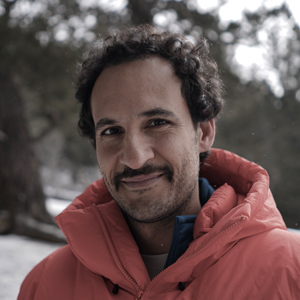
Ali Abbasi is a writer and director. He was born 1981 in Iran and left his studies in Tehran to move to Stockholm, where he graduated with a BA in architecture. He then studied directing at the National Film School of Denmark, graduating with his short film M FOR MARKUS in 2011. His feature debut, SHELLEY premiered at the Berlinale in 2016 and was released in the US. He is best known for his 2018 film BORDER, which premiered in Cannes, where it won the Prix Un Certain Regard. The film was chosen as Sweden’s Academy Award® Entry, was widely released internationally, won the Danish Film Award and was nominated for three European Film Awards including Best Director, Best Screenwriter & Best Film. He is currently shooting the TV adaptation of “The Last of Us” for HBO in Canada.
Watch Ali Abbasi's movie Border on Edisonline.